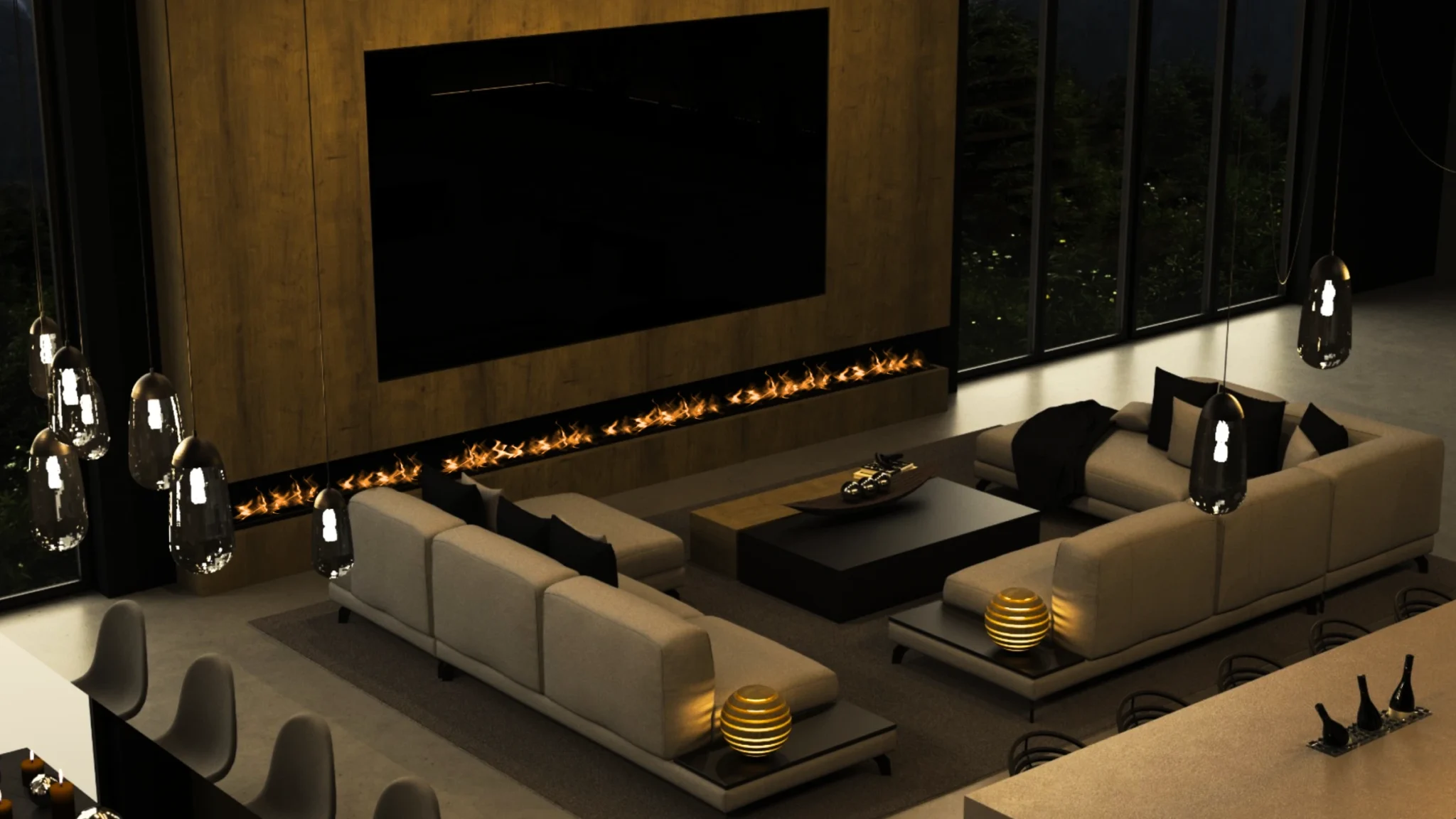
Designing Large-Scale Interiors – How to Create Spacious Home Designs with Harmony and Style

Luxury in space, not in excess

Designing large interiors is a true art of balance. While it may seem that the more space you have, the easier it is to arrange, the reality is quite the opposite. Expansive interiors — houses, villas, and apartments over 150 square meters — require a carefully thought-out concept to make the space not only impressive but also coherent and functional.

For an interior designer, the key lies in maintaining harmony of proportion, rhythm, and light, which together define the character and sense of comfort within the space. It is these elements that determine whether a large area becomes a symbol of luxury — or simply emptiness.

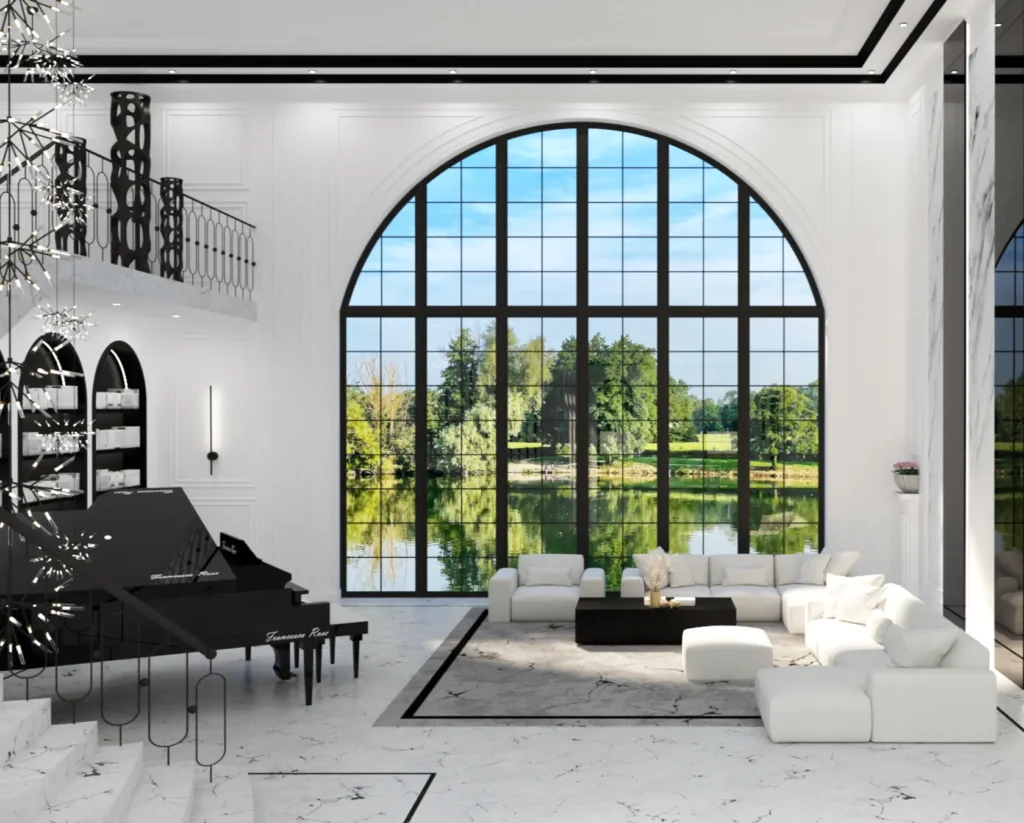
Czarno biały salon

1. Understanding the Space – The Starting Point of Every Design

Every large-scale interior design project begins with reading the architecture of the building.
High ceilings, open zones, panoramic glazing, or mezzanines are all elements that require an individual approach.

It is essential to determine, already at the concept stage:

  • the main visual axes — what should catch the eye upon entering the space,

  • the focal points of the composition (for example, a fireplace, a kitchen island, or a sculptural staircase),

  •  

2. Zoning – The Key to Functionality in Large Spaces

In small interiors, we fight for every square meter. In large ones, we fight for cohesion.
That is why zoning is the foundation of designing spacious interiors.

The most common zones include:

  • The living area (living room, dining room, kitchen),

  • The private area (bedrooms, walk-in closets, bathrooms),

  • Technical and recreational zones (garage, gym, spa, office).

The boundaries between them do not have to be physical — they can be created through:

  • Differences in floor or ceiling levels,

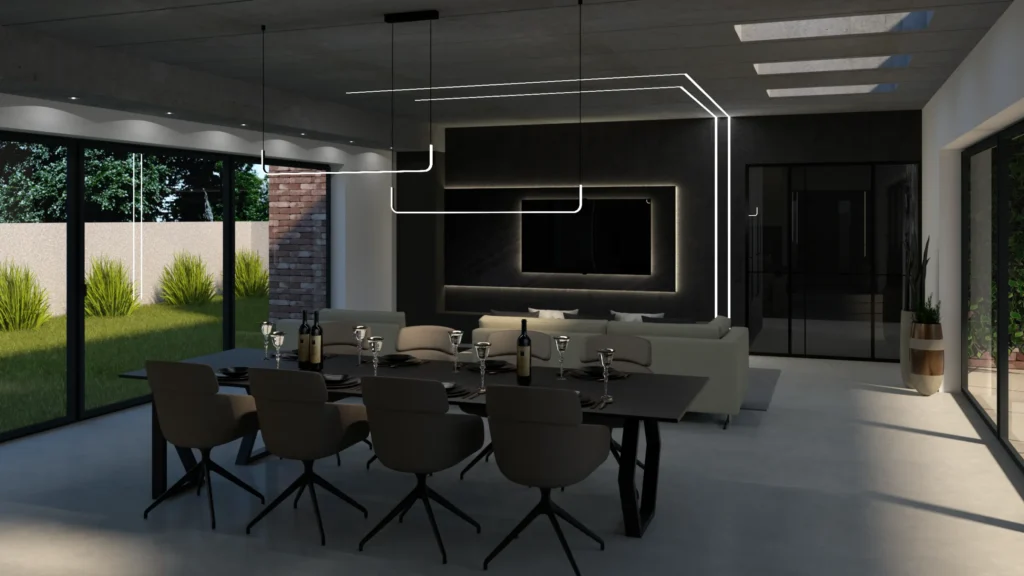
  • The use of lighting (e.g., linear LED lights),

  • Changes in materials or textures (stone versus wood),

  • Furniture with a distinct character (e.g., a kitchen island as a symbolic divider).

Projekt wnętrz katowice

3. Scale and Proportion – Harmony Despite the Size

A large space can easily “swallow” even sizable furniture.
That is why a designer must work with scale proportional to the space — larger material formats, taller doors, wider moldings, and furniture with a more substantial presence.

Maintaining proportion ensures visual balance. The interior ceases to feel “empty” and begins to feel representative and cohesive.

For example: in a 400 m² villa, a classic 60 cm diameter chandelier would get lost in a living room with a 5-meter ceiling. In such a case, lighting with a diameter of 1–1.5 meters, or a composition of several fixtures, is needed to create the impression of an architectural installation.

4. Light – Creating Mood and Spatial Hierarchy

In large interiors, light acts as a visual guide.
Well-designed lighting allows you to:

  • Highlight key zones (e.g., dining area or living room),

  • Create mood and coziness,

  • Establish rhythm and direct the viewer’s gaze.

Combining natural light with layered artificial lighting (primary, secondary, decorative) gives the space depth and softness.
It is also important to remember that large glazing — so characteristic of modern villas — requires balancing color and light temperature throughout the day.

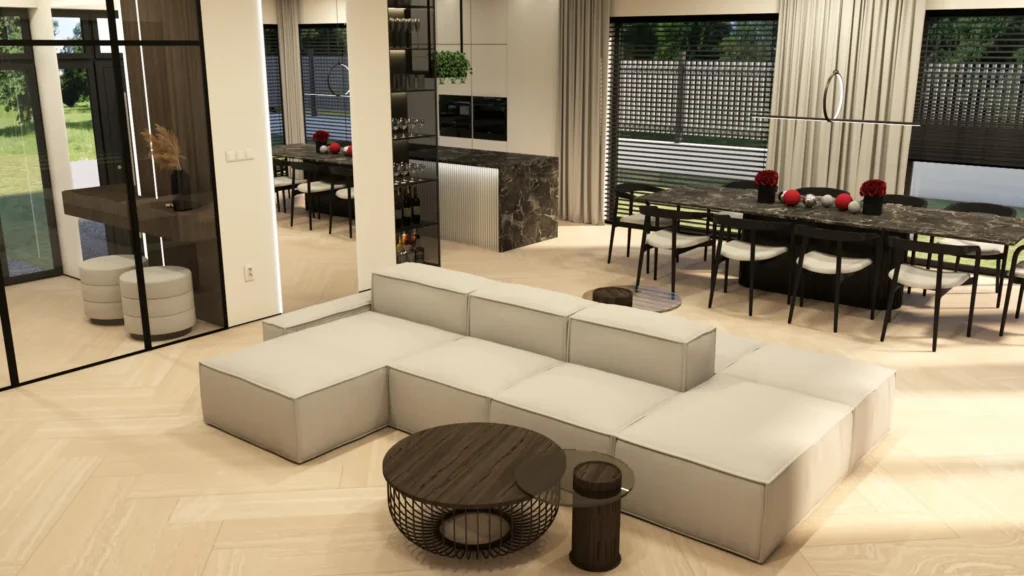
Dom pod warszawą

5. Materials and Textures – Luxury in the Details

Designing large interiors provides the opportunity to use premium materials — natural stone, wood, microcement, textured glass, and veneer.
However, the secret lies not in their cost, but in consistency and rhythm.

Rule of thumb: less is more.
In a single space, it is better to limit yourself to 3–4 main materials that are repeated across different zones — this ensures harmony and a sense of order.

6. Acoustic Comfort and the Warmth of a Homey Atmosphere

Large spaces can sometimes feel… too large. Echo, visual coldness, and difficulty in creating coziness are common challenges.
Solutions include:

  • Soft materials (rugs, curtains, upholstered furniture),

  • Acoustic panels or fabric wall finishes,

  • Warm lighting and varied furniture heights.

It is these details that make a 300 m² space still feel like home.

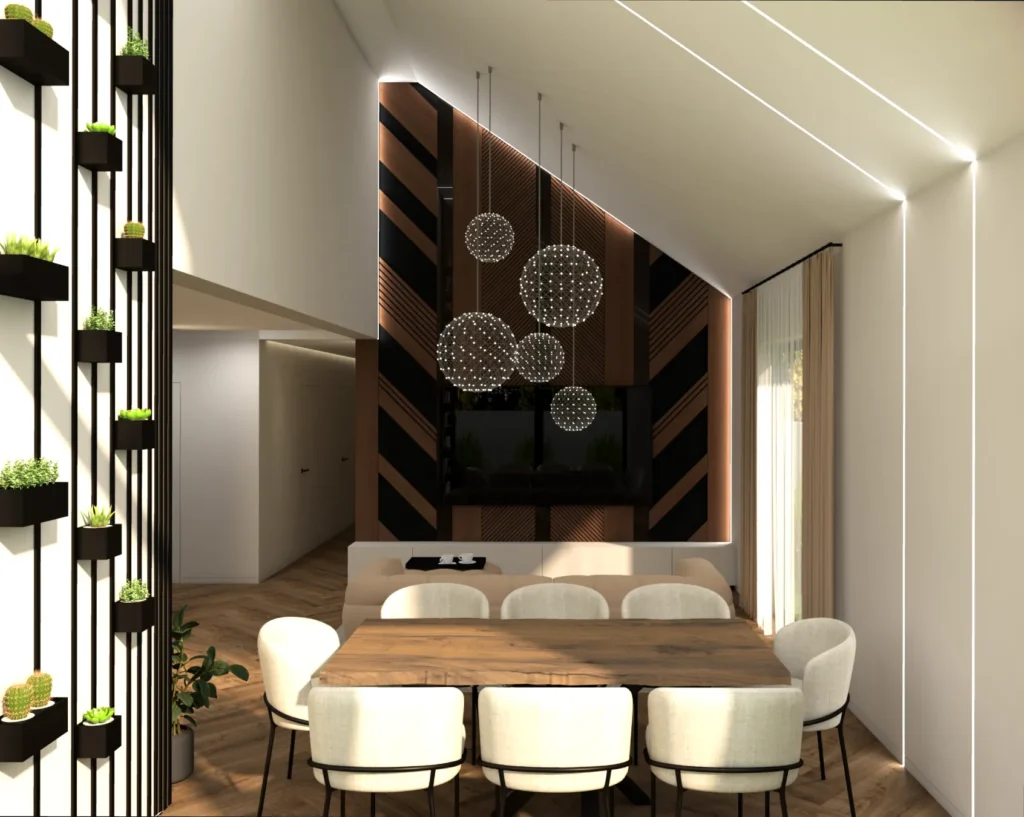
Cudowne oświetlenie salonu

7. Individual Character – An Interior That Tells a Story

A large floor area is the perfect canvas to express the owners’ personality.
It is the moment when a designer can create unique solutions — custom libraries, glass galleries, built-in storage, and relaxation zones.

Home and villa owners increasingly expect a personalized design that does not simply follow trends, but interprets them according to their lifestyle.
This is precisely what sets the best design studios apart — including those operating in Warsaw and the surrounding areas.

Conclusion – A Large Interior, a Great Responsibility

Designing large-scale interiors is a process that requires knowledge, a sense of proportion, and aesthetic consistency.
It is more than just selecting materials — it is interior architecture in the truest sense.

Every square meter matters.
And a well-designed space ensures that luxury comes not from size, but from harmony.

Nowoczesny salon, luksusowy salon, bio kominek, kominek led

ONE LINE DESIGN

Call Now Button